
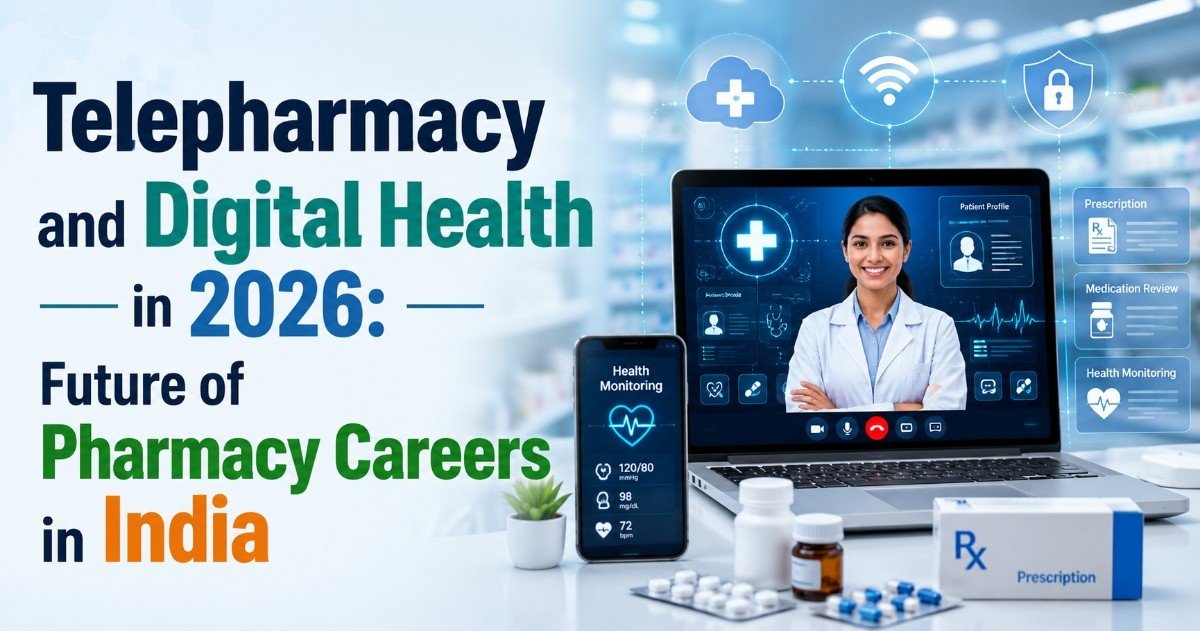
The Rise of Telepharmacy and Digital Health: Reshaping Pharmacy Practice in 2026
The traditional image of a pharmacist dispensing medications behind a counter is rapidly evolving. As we move further into 2026, the integration of digital health technologies and telepharmacy is fundamentally reshaping how pharmacists interact with patients, manage medications, and contribute to the broader healthcare ecosystem.
For pharmacy students and working professionals alike, understanding these technological shifts is no longer optional—it is essential for delivering modern, patient-centric care.
What is Telepharmacy?
Telepharmacy is the practice of delivering pharmaceutical care remotely through digital communication technologies. It enables pharmacists to provide medication counseling, prescription verification, medication therapy management, and patient monitoring without requiring patients to visit a physical pharmacy.
Through video consultations, secure messaging platforms, remote prescription reviews, and chronic disease monitoring, telepharmacy is improving healthcare accessibility and efficiency across the world.
As digital healthcare adoption accelerates in India, telepharmacy is expected to become an integral part of modern pharmacy practice.
Why Telepharmacy Matters in 2026
The healthcare industry is undergoing a digital transformation. Rising patient expectations, increasing chronic disease burden, and the need to improve healthcare access have accelerated the adoption of digital health solutions.
Telepharmacy helps bridge gaps in pharmaceutical care by enabling pharmacists to:
Provide remote medication counseling.
Improve medication adherence.
Monitor patients with chronic illnesses.
Reduce medication-related errors.
Extend healthcare services to rural and underserved communities.
Collaborate more effectively with physicians and healthcare teams.
For the future pharmacist, digital competency is becoming just as important as clinical expertise.
Key Digital Health Trends Transforming Pharmacy in 2026
1. Artificial Intelligence (AI) in Medication Management
Artificial Intelligence is revolutionizing pharmacy practice by assisting pharmacists in identifying potential drug interactions, predicting adverse effects, and optimizing medication therapy based on patient-specific factors.
AI-powered systems can:
Detect high-risk prescriptions.
Support pharmacogenomic decision-making.
Predict medication adherence patterns.
Automate repetitive administrative tasks.
As a result, pharmacists can devote more time to direct patient care and complex clinical decision-making.
2. Wearable Technology Integration
Wearable healthcare devices are generating real-time patient health data like never before.
Examples include:
Smartwatches
Continuous Glucose Monitors (CGMs)
Smart Blood Pressure Monitors
Fitness Tracking Devices
Pharmacists can use this information to monitor chronic conditions such as diabetes and hypertension, enabling timely interventions and personalized treatment recommendations.
This proactive approach significantly improves patient outcomes.
3. E-Prescribing and Smart Electronic Health Records (EHRs)
Electronic prescribing systems integrated with Electronic Health Records (EHRs) have dramatically reduced medication errors.
Benefits include:
Access to complete medication histories.
Allergy alerts.
Drug interaction checks.
Improved coordination among healthcare professionals.
Faster prescription processing.
These technologies contribute to safer, more efficient, and patient-centered care.
Traditional Pharmacy vs Digital Pharmacy
| Feature | Traditional Pharmacy | Digital Pharmacy |
|---|---|---|
| Patient Interaction | Face-to-face | Virtual |
| Prescription Verification | Manual | Electronic |
| Monitoring | Periodic | Real-time |
| Accessibility | Location-based | Anywhere |
| Data Usage | Limited | Wearables and EHRs |
| Career Roles | Retail/Hospital | Telehealth and Informatics |
The Impact of Telepharmacy on Patient Care
One of the greatest advantages of telepharmacy is improved healthcare accessibility.
In rural and underserved regions, patients often face limited access to licensed pharmacists. Telepharmacy addresses this challenge by enabling remote pharmacists to deliver high-quality pharmaceutical care regardless of geographic barriers.
Additional benefits include:
Enhanced medication adherence.
Faster resolution of medication-related concerns.
Reduced travel burden for patients.
Improved chronic disease management.
Greater patient convenience and satisfaction.
Patients can quickly consult pharmacists regarding dosage instructions, side effects, and medication concerns from the comfort of their homes.
Essential Skills for the Modern Pharmacist
To succeed in this digital-first healthcare environment, future pharmacists must develop both clinical and technological competencies.
Digital Literacy
Pharmacists should be proficient in:
Telehealth platforms
Electronic Health Records
Pharmacy management systems
Digital documentation tools
Virtual Communication
Effective remote consultations require pharmacists to:
Build trust virtually.
Demonstrate empathy.
Deliver clear patient instructions.
Enhance patient engagement.
Data Analysis
Modern pharmacists increasingly interpret data generated from wearable devices and digital health systems to make evidence-based clinical decisions.
Cybersecurity Awareness
Protecting sensitive patient health information is critical.
Pharmacists must understand:
Data privacy principles.
Secure communication practices.
Digital ethics.
Compliance with healthcare regulations.
Emerging Career Opportunities in Digital Pharmacy
The digital revolution has expanded career possibilities for B.Pharm and D.Pharm graduates beyond traditional pharmacy settings.
Promising career options include:
Telepharmacy Clinical Specialist
Provides remote patient consultations, medication reviews, and pharmaceutical care services.
Pharmacy Informaticist
Manages healthcare information systems and optimizes medication-use processes through technology.
Digital Health Consultant
Guides healthcare organizations in implementing digital health solutions and pharmacy technologies.
Remote Medication Safety Officer
Monitors medication safety, analyzes risks, and develops strategies to minimize medication errors.
Clinical Data Analyst
Interprets patient and medication data to improve healthcare outcomes and support evidence-based practice.
As healthcare continues to digitize, these roles are expected to witness significant growth across India and globally.
Telepharmacy in India: The Road Ahead
India's healthcare sector is rapidly embracing digital transformation through initiatives aimed at strengthening healthcare accessibility and infrastructure.
The increasing adoption of telemedicine, electronic health records, and digital health platforms is creating new opportunities for pharmacists equipped with technological competencies.
As healthcare delivery models evolve, pharmacists are expected to play a larger role in remote patient care, medication management, and interdisciplinary collaboration.
This shift makes digital health knowledge a valuable asset for today's pharmacy students.
Frequently Asked Questions (FAQs)
Q1. What exactly is telepharmacy?
Answer: Telepharmacy is the use of telecommunications technology to provide remote pharmaceutical care. Services include patient counseling, prescription verification, medication reviews, and chronic disease monitoring.
Q2. Is telepharmacy legal and recognized in India?
Answer: Yes. India's healthcare ecosystem is increasingly accommodating digital healthcare services. Regulatory frameworks continue to evolve to ensure safe, ethical, and compliant remote pharmaceutical care.
Q3. Will AI and automation replace human pharmacists?
Answer: No. AI can automate repetitive tasks and support clinical decisions, but it cannot replace the clinical judgment, empathy, communication skills, and ethical responsibilities of pharmacists. Technology enhances the pharmacist's role rather than replacing it.
Q4. How can pharmacy students prepare for a career in digital health?
Answer: Students should strengthen their clinical knowledge while developing competencies in health informatics, digital communication tools, healthcare technologies, and data privacy practices. Exposure through internships and practical training can provide valuable experience.
Q5. Is telepharmacy a good career option in India?
Answer: Yes. The expansion of telehealth services and digital healthcare platforms has created promising opportunities for pharmacy graduates in hospitals, telehealth companies, healthcare startups, and pharmaceutical organizations.
Q6. Which pharmacy course is better for digital healthcare careers?
Answer: Both D.Pharm and B.Pharm graduates can build careers in telepharmacy. However, B.Pharm often provides broader opportunities in clinical pharmacy, healthcare informatics, and advanced digital healthcare roles.
Conclusion
The integration of telepharmacy and digital health is not a temporary trend—it represents the future of pharmaceutical care. By embracing emerging technologies, pharmacists can improve patient outcomes, expand healthcare accessibility, and strengthen their role as essential healthcare providers in an increasingly connected world.
For aspiring pharmacists, staying ahead of these changes requires a strong educational foundation combined with an openness to innovation.
At Gautam Institute of Nursing & Paramedics, Biharsharif, Nalanda, Bihar, we are committed to preparing future-ready healthcare professionals through our industry-oriented Diploma in Pharmacy (D.Pharm) and Bachelor of Pharmacy (B.Pharm) programs. With experienced faculty, state-of-the-art laboratory facilities, practical training opportunities, and a focus on emerging healthcare trends, we empower students to excel in both traditional and digital pharmacy environments.
If you aspire to build a rewarding career in the evolving pharmaceutical landscape, now is the perfect time to begin your journey toward becoming a skilled, compassionate, and future-ready pharmacist.